AVLUSING
Thermal Delousing: Effective and Gentle Salmon Lice Control
Thermal delousing is a key non-medicinal method in Norwegian salmon farming. It uses tempered water for effective removal of salmon lice.
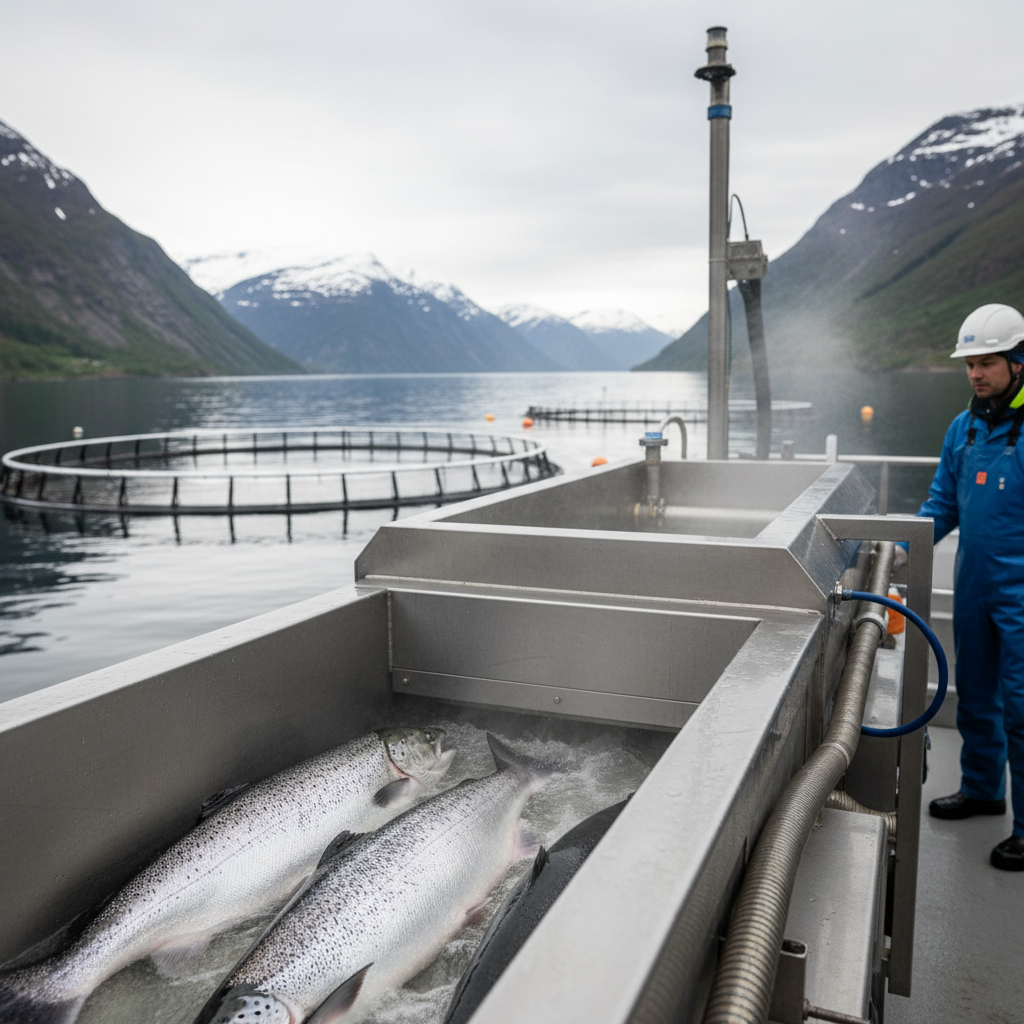
Thermal Delousing: A Cornerstone of Modern Salmon Lice Management
Salmon lice (Lepeophtheirus salmonis) represent one of the most significant challenges for Norwegian salmon farming. The parasite not only causes substantial economic losses for the industry, estimated at several billion NOK annually, but also has serious consequences for fish welfare and wild fish populations. In the quest for effective and sustainable solutions, thermal delousing has established itself as a central non-medicinal method for combating salmon lice.
What is Thermal Delousing?
Thermal delousing is a treatment method that exploits the biological difference in temperature tolerance between salmon and salmon lice. While salmon can tolerate a brief exposure to tempered water relatively well, salmon lice are significantly more sensitive and detach from the host fish when subjected to a rapid, controlled increase in temperature. This method avoids the use of chemicals, which is an important contribution to environmental protection and addressing resistance issues.
How Does Thermal Delousing Work?
The process begins with salmon being gently pumped from the net pen into a specially designed treatment unit, often located aboard a wellboat or a dedicated delousing vessel. Inside the unit, the fish are passed through a chamber where they are exposed to tempered seawater. The water is typically heated to a range between 28 and 34°C, depending on the system and the fish's health condition.
The key to efficiency and welfare lies in the extremely short exposure time. The fish remain in the tempered water for only 20 to 30 seconds before being quickly returned to seawater at normal temperature. This brief, but intense, thermal shock is sufficient for the salmon lice to lose their grip and fall off the salmon. The detached lice are then collected and destroyed to prevent further spread. Systems such as FLS, Thermolicer, and Optilice are examples of widely used technologies that employ this principle.
Benefits of Thermal Delousing
Thermal delousing offers several significant advantages that have contributed to its widespread use:
Non-Medicinal: The method eliminates the need for chemical delousing agents, reducing environmental impact and the risk of resistance development in lice.
High Efficacy: The treatment has proven to be highly effective, often achieving a removal rate of over 90% of salmon lice per treatment.
Environmentally Friendly: Without chemical discharges, it is a more sustainable option for the environment around aquaculture facilities.
Rapid Treatment: The short exposure time helps to minimize stress for the fish compared to longer treatment periods.
Flexibility: Treatment can be performed at the site, reducing the need for transport and logistical challenges.
Challenges and Fish Welfare Considerations
Despite its benefits, it is crucial to acknowledge and address the challenges associated with thermal delousing, particularly regarding fish welfare. The process involves handling and a temperature shock that can be stressful for the fish.
Stress and Mortality: If the process is not performed optimally – for example, with too high a temperature, too long an exposure time, or on fish with poor health beforehand – it can lead to increased stress, injuries, and, in the worst case, mortality.
Operational Competence: Requires a high degree of competence and precise monitoring by operational personnel to ensure all parameters (temperature, time, water quality) are within optimal limits.
Fish Health: It is critical that the fish to be treated are in good general condition. Weak fish are more vulnerable to treatment stress.
* Regulatory Requirements: The Norwegian Food Safety Authority (Mattilsynet) has strict guidelines and requirements for performing thermal delousing to safeguard fish welfare.
Continuous research and development are essential to optimize processes, improve equipment, and minimize risks to the fish.
Technological Development and Future Perspectives
The industry is investing significantly in further developing thermal delousing systems. The focus is on even gentler fish handling, improved water quality control during treatment, and the development of systems that can be seamlessly integrated with other delousing methods, such as freshwater treatment or mechanical removal. Automation and advanced sensor technology are playing an increasingly important role in ensuring precision and reducing human error.
Thermal delousing is part of a broader Integrated Pest Management (IPM) strategy, where various methods are combined to achieve the best possible results with the least possible burden on the fish.
Conclusion
Thermal delousing has established itself as an indispensable tool in the fight against salmon lice in Norwegian aquaculture. As a non-medicinal method, it contributes significantly to a more sustainable and environmentally friendly production of salmon. While challenges related to fish welfare require constant attention and improvement, the industry continues to innovate to make the method even safer and more effective. With a sustained focus on competence, technology, and fish health, thermal delousing will remain a central arrow in the strategy to ensure healthy and sustainable salmon production for the future.