ARTICLE
Consolidation in Norwegian Aquaculture
Norwegian aquaculture sees fewer, larger players. We explore the drivers behind this consolidation, from regulations to economies of scale and global markets.
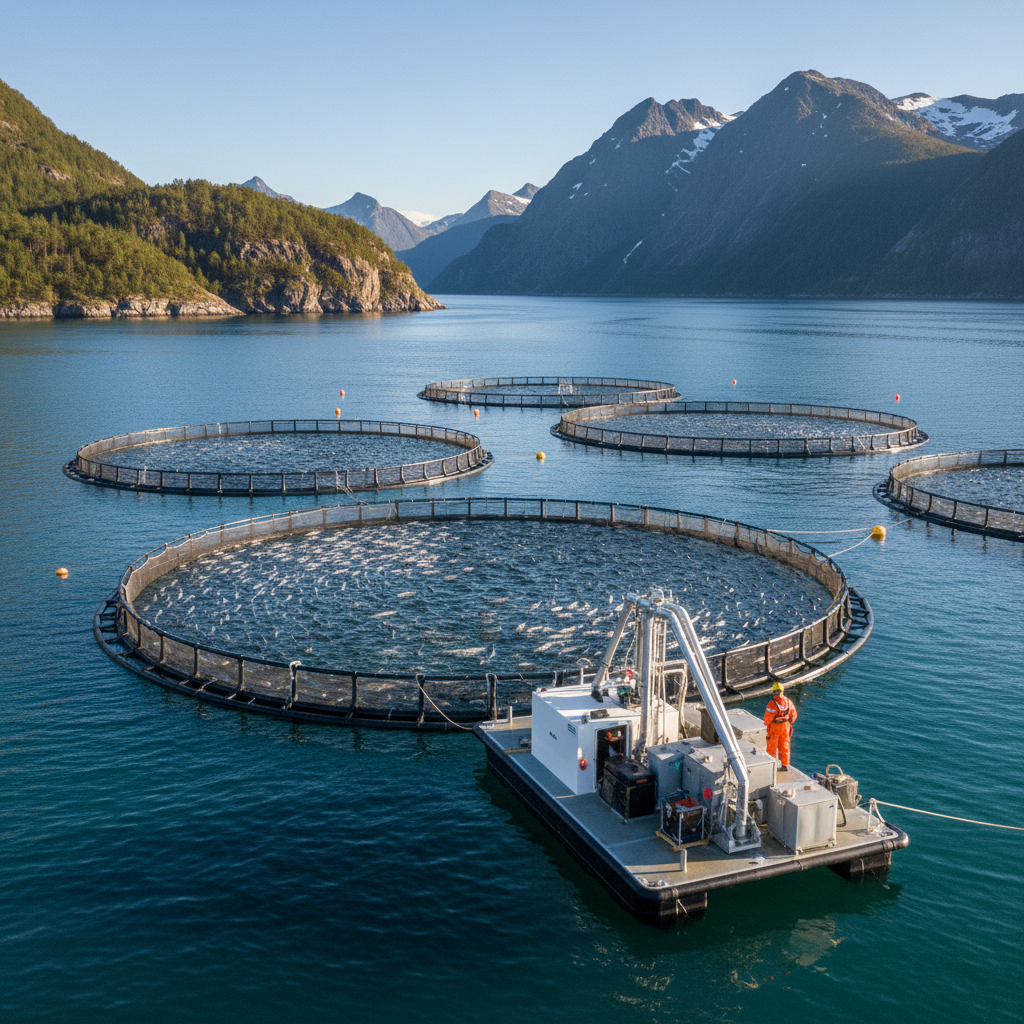
Consolidation: The Trend Shaping Norwegian Salmon Farming
The Norwegian aquaculture industry, once characterized by a multitude of small, family-owned companies along the coast, has undergone a fundamental transformation. Today, the landscape is dominated by a few large, vertically integrated corporations. This wave of consolidation is not accidental; it is driven by a combination of strict regulations, significant capital requirements, and an ever-changing global market. The result is an industry that is more professionalized and capital-intensive than ever before.
Major players like Mowi, SalMar, and Lerøy Seafood Group now control a significant share of the total production capacity (Maximum Allowable Biomass - MAB) in Norway. This development has shifted the balance of power and the dynamics of the entire value chain, from smolt production and feed suppliers to processing plants and sales.
Key Drivers of Consolidation
Several factors have accelerated this trend. Understanding them is key to understanding the industry today.
1. Regulatory Framework and Limited Growth
Norwegian authorities strictly regulate growth to ensure sustainability. The "traffic light system," which divides the coast into production areas based on the impact of sea lice on wild salmon, is the central tool. Growth is only allocated in "green" zones, often through costly auctions.
High Barrier to Entry: The price of new licenses is extremely high, favoring companies with a strong financial backbone.
Acquisition as a Growth Strategy: For many, the only viable way to grow is by acquiring existing companies with established MAB. This makes smaller operators attractive acquisition targets.
2. Economies of Scale and Capital Requirements
Modern salmon farming is technology-heavy and capital-intensive. Larger companies have clear advantages:
Investments: They have the capital to invest in expensive delousing technology (e.g., thermal and mechanical), large land-based smolt facilities (post-smolt) to reduce time at sea, and advanced feeding systems.
Bargaining Power: Large volumes secure better prices on input factors like feed, which accounts for over 50% of production costs.
Risk Diversification: By having operations in multiple regions (and countries), large companies can better manage biological challenges such as disease outbreaks in a single area.
3. Globalization and Value Chain Control
The demand for Norwegian salmon is global. Large, integrated companies are better positioned to meet this demand.
Market Access: They have the resources to build global brands, conduct sophisticated marketing, and manage complex logistics.
* Value Creation: By controlling the entire value chain—from roe to pre-packaged products in the supermarket (VAP - Value Added Processing)—they can capture a larger share of the value and stabilize margins.
Consequences and Future Outlook
Consolidation has both positive and negative aspects. On one hand, it has led to increased professionalism, greater investment in research and development (R&D), and a more robust industry that is globally competitive. Improved biosecurity and more efficient operations are also clear benefits.
On the other hand, there are concerns about the loss of local ownership and decisions being moved from coastal communities to central headquarters. A less diverse ownership structure could also reduce the variety of operational strategies and innovation from smaller players. For the supplier industry, fewer and larger customers can mean increased pressure on margins.
Looking ahead, the trend is likely to continue. The development of offshore and land-based farming will require enormous investments, further favoring large companies with access to capital markets. The balance between large-scale efficiency and locally anchored value creation will remain a central debate in shaping the future of the Norwegian aquaculture industry.