FINANS
Profit Margins in Aquaculture: Key to Success
Explore profit margins in Norwegian salmon farming. Understand drivers, challenges, and strategies for profitability.
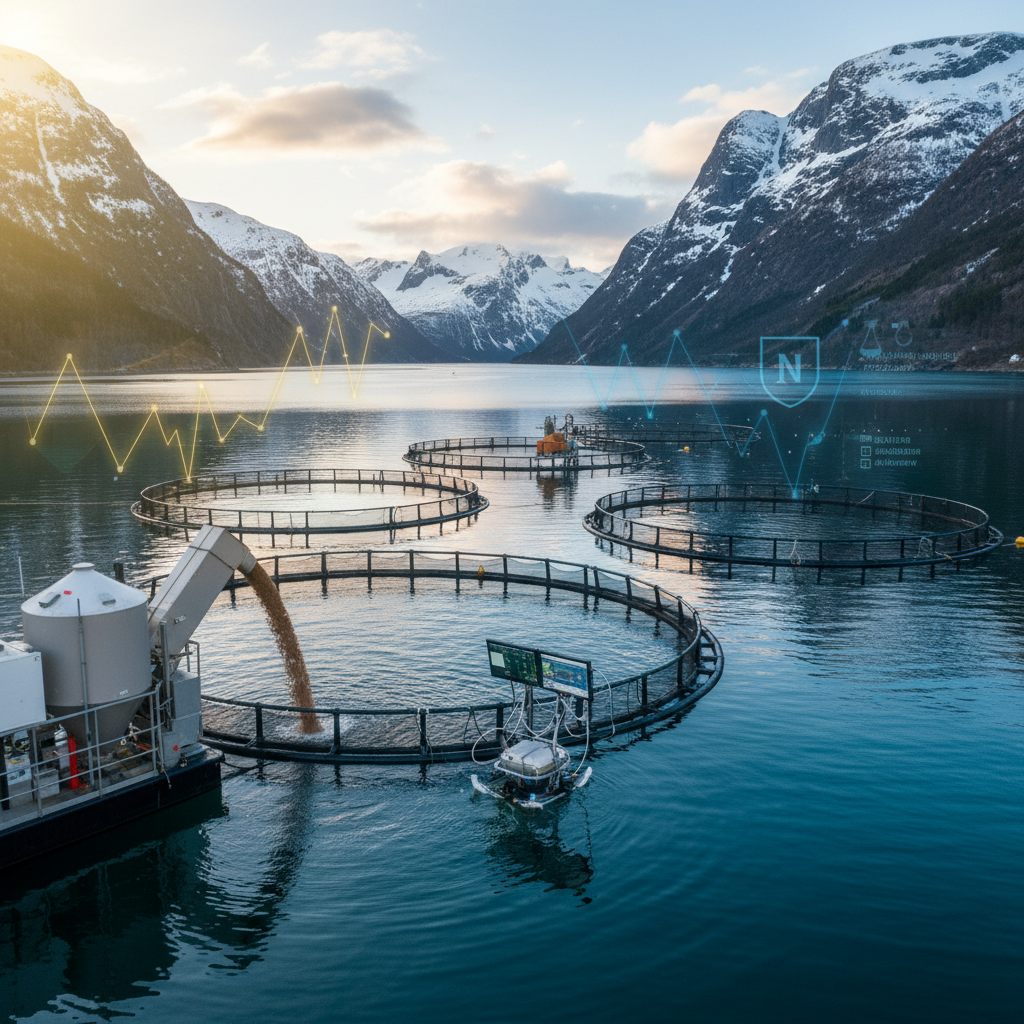
Norwegian salmon farming is a global success story, recognized for its innovation and contribution to the world's food supply. However, behind the impressive growth figures lies a complex landscape of financial drivers that determine companies' profit and earnings. Understanding the profit margins in this industry is crucial for investors, industry professionals, and policymakers alike. This article will explore the main factors affecting profitability in the aquaculture industry, from salmon prices and production costs to biological challenges and regulatory frameworks.
What Drives Profit Margins?
Profit margins in aquaculture are the result of a delicate balance between revenues and expenses.
Salmon Prices
The price of salmon is by far the most important revenue driver. Salmon prices are notoriously volatile and influenced by:
Supply and Demand: Global production versus consumer trends. An increase in supply from Norway or other producing countries (e.g., Chile) can push prices down, while strong demand in markets such as Europe, Asia, and the USA can drive them up.
Exchange Rates: Norwegian exports are dominated by the Euro and US Dollar. A weak Norwegian Krone strengthens revenues measured in NOK.
Seasonal Variations: Prices can often be higher during periods of increased demand, such as before holidays.
Trade Restrictions and Geopolitics: Trade barriers can affect market access and thus prices.
Historically, salmon prices have fluctuated significantly, from below NOK 40/kg to over NOK 100/kg in peak periods, which is directly reflected in aquaculture companies' quarterly results.
Production Costs
The cost side is complex and constantly under pressure.
Feed: This is the largest single cost, often between 50-60% of total production costs. The price of feed is influenced by global raw material prices (soy, fishmeal, fish oil) and logistics. Efficient Feed Conversion Ratio (FCR) is critical for optimizing this cost.
Biological Costs: Costs associated with managing sea lice, diseases, and mortality are significant. Marine Harvest (now Mowi) reported in 2017 that sea lice treatment cost the industry over NOK 5 billion annually. Mortality, which has been a persistent problem and at times exceeded 15-20% of biomass in certain regions, represents a direct loss of income and increased removal costs. Preventive measures, such as cleaner fish, lice skirts, and advanced well boats, also contribute to the cost structure.
Wages and Energy: Operational costs for personnel and energy consumption are also important components.
Government Fees and Taxes: The recently introduced resource rent tax (grunnrenteskatt) on aquaculture in Norway, effective from January 1, 2023, has significantly altered the financial landscape. The tax implies an effective marginal tax rate of 57.6% (including corporate tax), which reduces companies' after-tax profit and has led to major investment postponements and cancellations in the industry.
Volume and Efficiency
Production volume, limited by licenses and Maximum Allowable Biomass (MAB), as well as operational efficiency, plays a major role. Larger companies benefit from economies of scale in procurement, logistics, and R&D. Technological advancements such as automated feeding systems and improved monitoring help improve efficiency and reduce losses.
Challenges and Risks
Profitability in aquaculture is exposed to several types of risk:
Biological Risk: Outbreaks of diseases (e.g., ISA, PD) and parasites (sea lice) can lead to massive mortality and significant financial losses. Climate change can also affect water quality and disease pressure.
Market Risk: Unpredictable salmon prices, changes in consumer preferences, or unexpected trade conflicts.
Regulatory Risk: Changes in environmental requirements, licensing rules, or tax rates can have major consequences, as seen with the resource rent tax.
Environmental Pressure: Increased focus on sustainability from consumers, investors, and authorities requires continuous investments in more environmentally friendly solutions.
Strategies to Optimize Profit
Aquaculture companies employ a range of strategies to secure and improve their profit margins:
Cost Control and Efficiency: Continuous optimization of feed utilization, implementation of effective sea lice treatment methods, and reduction of mortality.
Innovation and Technology: Investment in genetic research for more robust fish, development of closed and semi-closed containment systems for better biological control, and digitalization for smarter operations.
Market Diversification and Branding: Developing new markets, differentiating products (e.g., fresh vs. frozen, fillet vs. whole fish), and building strong brands to achieve higher prices.
Sustainability: Focus on environmental, social, and economic sustainability (ESG) is not only a requirement but also an opportunity to attract investors and consumers who value responsible production.
Future Outlook
The future of profit margins in Norwegian salmon farming is characterized by both opportunities and challenges. Global demand for seafood, especially salmon, is expected to continue to grow. This provides a solid foundation for revenues. At the same time, the industry will have to navigate an increasingly tight regulatory landscape, rising input costs, and persistent biological challenges. The ability to innovate, adapt, and operate sustainably will be crucial for maintaining healthy profit margins and ensuring long-term success. The Norwegian aquaculture industry has shown a remarkable ability to adapt and will likely continue to be a global leader, but with an ever-sharper focus on optimizing all parts of the value chain.
Conclusion:
Profit margins in Norwegian salmon farming are a dynamic and multidimensional field. They are shaped by an interplay of global market prices, stringent production costs, biological realities, and a changing regulatory and tax environment. To maintain profitability and growth, aquaculture companies must continuously work on cost control, embrace innovation, and prioritize sustainability. This complex interplay defines the economic pulse of one of Norway's most important export industries.